Archived · Jazz and Beyond · Jazz · 10 min read
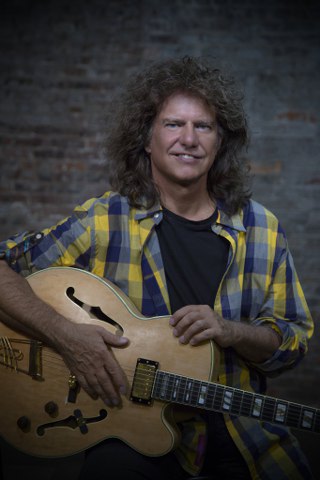
Peter Wockner interview with guitarist and composer Pat Metheny 10 September 2014
Peter Wockner interview with guitarist and composer Pat Metheny 10 September 2014 Peter Wockner: Your Grammy Award winning album with Charlie Haden…
This date is the archive capture date; the original publication date was unavailable.
Historical article recovered from a Wayback capture dated 2018-02-24.
Peter Wockner:
Your Grammy Award winning album with Charlie Haden ‘Beyond the Missouri Sky’ remains a definitive album in my collection. You went way back with Charlie Haden to the point of sharing the cover of Downbeat in August 1992. Respectfully, with the recent passing of Charlie Haden, can you reflect on his passion for music despite his physical condition and his influence in your musical relationship?
Pat Metheny:
This is a difficult subject for me to talk about. Charlie and I were best friends to each other for more than 35 years and shared a connection that was really deep on many levels. I think the music that we made together says more than I could ever explain in words.
PW:
You mentioned in that interview that ‘combination of Charlie and Ornette (Coleman) playing together is one of the magic combinations in the world today’. You also share some musical history with the legendary Ornette Coleman, can you describe from your perspective what makes Ornette’s music so unique?
PM:
With Ornette, there is always so much more to talk about than the actual notes; his amazing sound, his way of phrasing, his way of developing each idea to it’s natural conclusion and his harmonic concept all stand out as things that we can almost begin to quantify. But I have to say that the main thing in the end that affected me and inspired me the most was watching Ornette’s profound commitment to developing his own personal musical language over the course of his life as a musician. That has always been a big source of inspiration to me.
PW:
You have a frequent tendency to redefine your music and your sound like a Miles Davis. A case in point could be your 2003 album ‘One Quiet Night’ and then 2009’s ‘Orchestrion’. Philosophically as an artist, are you intent on redefinition or is it in your case exploratory or evolutionary?
PM:
For me, music is one big thing. Although there certainly are distinctions between conceptions of this band or that band or this record or that record, each setting is a variation on my personal sense of what music is and what it means to me.
In many ways, my main occupation over all these years, even before being “a guitar player” has been that of bandleader. Coming up with a concept for a band or a project, finding and hiring the right people and then writing music for it and finally getting it to become a viable live performing unit have been the consistent elements of my focus over all these years regardless of whatever context the music winds up in. Because I have also been the primary composer of the music that my various bands have played, I have always had specific needs to fill to get that particular set of music to sound the best that it can. In a lot of ways, I see the whole thing from Bright Size Life until now as one long trip, one long record, one long composition with a varying cast of characters that come and go to create a kind of exposition on the evolution of the basic premise that I laid out a long time ago on that first record.
PW:
I’d imagine with the rapid advancement in technology the world has experienced that making music in the 21st century is now pretty much limitless in its possibilities. What are the most exciting inputs and outputs for you in the way music can be created and shared these days?
PM:
Each era has unique musical opportunities that often juxtapose themselves in interesting ways with what the culture demands at the time. Over my life as a musician, there has been a revolution in terms of what music technology can offer - this has to be the best possible time in history to be a musician in terms of tools. That said, a good idea is a good idea - and, it must be said, the inverse is also true - and that happens in the timeless and rather unforgiving reality that there once was a musician like Bach (for example) who with much less “tech” wrote the best notes of all time. Whether music shows up in this guise or that guise, and whether it is modern technology or a kazoo is pretty much beside the point - if you have a really great idea, it will work hi-tech and super lo-tech. To me, I am pretty happy playing an acoustic guitar just by itself or inventing entirely new ways of presenting music using the revolutionary technical opportunities of the time - but good notes are always the priority.
PW:
Its hard to believe but there are only 4 guitarists in the Downbeat Hall of Fame. How does it feel to be one of those with names like Charlie Christian, Django Reinhardt, and Wes Montgomery before you?
PM:
I have gotten some really nice awards and honors over the years, but that is in a very different category. It was very special also since I have been reading Downbeat since I first started. When there is some kind of recognition along the way, I really try to appreciate it, and I do. There are certain honors like that one that are unbelievable to me, that I never would have anticipated or expected in a million years. At the same time, because I do live my life playing so much, I could say it like this; on a Tuesday, I played a gig and I played some stuff the best I’ve ever played it. I finally got to the point on that solo on that fourth tune that I’d been hoping I’d get to all tour long. I finally did it. Then the next night is Wednesday, and it doesn’t matter what I played on Tuesday. The people that are coming for the Wednesday gig don’t care what I played on Tuesday because they weren’t there and tonight it is Wednesday and I’ve got to play that fourth tune again and I hope I don’t mess it up.
My whole life is geared to enjoying stuff while it’s happening and then moving on. If you come to my house you’re not going to see one award or anything on the wall. I really appreciate it. I feel honored and humbled by it all, but my thing is, “Okay, tomorrow is the next thing,” and really, that’s the only thing for me - what’s happening next
PW:
The Unity Group that you are bringing to Australia is really an all-star band and its latest incarnation with Chris Potter and Antonio Sanchez has some serious traction. With the calibre of talent seemingly at your fingertips, can you tell us how you go about choosing a group like the members of the Unity Group?
PM:
I can’t really say enough about Chris Potter - he is one of the greatest musicians I have ever known and every second I have been on the bandstand with him has been an absolute pleasure. Besides the incredible level of musicianship that he possesses, he is one of the most professional players I have ever been around. There is no drama or insecurity - just music all the way. And he is one of the few musicians I have ever been around who has the same kind of work ethic that I do - he gets there early every night and works on music for hours in preparation for the gig. There are some musicians who are talented and see themselves as some kind of natural geniuses or something because of a certain amount of natural ability - but that is often rarely the case over the long term. I would always contend that talent is an element, but over the long run, ultimately a minor part of it all - it is mostly hard work. Chris is a perfect example of that.
By the same token, I can’t say enough about Antonio. As I often say, he is the drummer I thought would never be born. He has certainly been my most important collaborator over these past 15 years or so. I feel like he can contribute to almost any project I launch. And again, his personal maturity and lack of personal drama is a huge thing for me - he shows up to play every night.
Ben Williams came onto my radar thanks to Christian McBride. Ben is the perfect complement to this band - he brings a youthful spirit and dimension to the band. And he continues to get better and better. He is fantastic person too, which makes it all the better.
Regarding Giulio Carmassi, after the success of the Unity Band record, to do what I wanted to do - to take the basic idea of what that quartet implied to a whole other place - I knew I wanted to expand the palette by adding another musician. However I didn’t want to alter the incredible dynamic of the quartet. What I really needed was a good musician who was kind of like a session musician, someone who could play a lot of parts that I wrote out for them to play. I needed someone to kind of fill out the sound of the band as kind of a utility musician, I didn’t really need another soloist or creative force, especially with Chris Potter standing right there, but I did need someone who understands the language that we are dealing in and can contribute in a textural way and give me another voice to write for. He is doing fine in that role for this band.
PW:
What form of recognition do you appreciate the most and why? Live audience, record buyers, critics?
PM:
As much as I try to be aware and considerate of the audience as individuals and as a whole, my main focus is always on the music from my own personal point of view. I have found that it is impossible to guess what people are hearing, what they think or even what they expect. The only thing I know for sure is what I love about music and what I hope to achieve in sound through the ideas that come up at a particular moment in time. I follow whatever that is pretty faithfully.
PW:
You’re an artist that has accumulated numerous milestone achievements over a lengthy career. What lifestyle regimens do you adhere to ensure the fire keeps burning inside?
PM:
No real regimens other than to try to really enjoy each day and each moment in it as much as I can. I try to stay loose and relaxed. On the road I need to spend a lot of time warming up before each performance, sometimes 2 hours or more - that is an important part of each day.
PW:
What are the names of the next wave of jazz guitar talent and do you think it is any easier for them?
PM:
I like the usual suspects - Kurt Rosenwinkel and Gilad Hekelsman and Mike Moreno all are favorites for me. Music is never easy for anyone.
PW:
What can PMUG fans expect for the forthcoming Australian tour?
PM:
This is one of the strongest bands I have ever had and I am so happy we are getting the chance to come visit you all.
As much as I am proud of the records, the live presentation is always something way more and this is especially true this time. Of course the core is this crew of exceptional musicians, but one of the goals I had this time was to integrate elements of the Orchestrion project (musical robotics) into this band in a way that is pretty unique and that stuff will be with us there too. And it won’t be only about the newest projects - this band can truly play anything; we are covering a huge range of things from all over my career as a musician.