Archived · Jazz and Beyond · Jazz · 6 min read
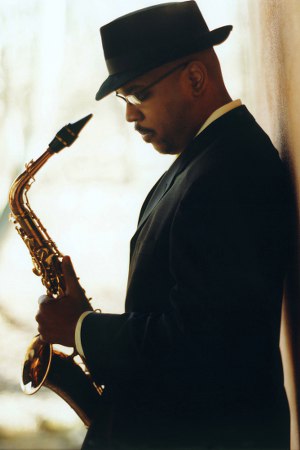
Peter Wockner's interview with saxophonist and composer Greg Osby 6th May 2014
Peter Wockner's interview with saxophonist and composer Greg Osby 6th May 2014 PW: After a 16 year tenure and 15 albums for Blue Note, in 2008 you…
This date is the archive capture date; the original publication date was unavailable.
Historical article recovered from a Wayback capture dated 2018-02-24.
PW:
After a 16 year tenure and 15 albums for Blue Note, in 2008 you launched your own record label ‘Inner Circle Music’. How has this turned out for you and is the direction you’re heading in changed over the last six years?
GO: It was the best decision that I could have made. Having complete control in every stage of the production of my releases is best for me at the moment. Of course, running a label requires a great deal of time and energy, but the end results feel much more satisfying when we get good responses for our efforts, knowing that no compromises were made in the process.
PW: Jazz or improvised music is one of the most purist forms of personal expression but with that, comes a certain vulnerability because each night you’re putting everything on the line in a very public way. I’m thinking that it would be easier for you to deal with criticism these days given your success and stature as an artist but how did you deal personally with criticism in the early days when critics might have had negative opinions on your jazz-rap fusion?
GO:
“Critics.” The very term and everything that it represents is idiotic. No other profession allows non-practitioners to determine the value of it’s participant’s work or their worth. The medical profession, for example, doesn’t allow people who have never studied or practiced medicine to offer commentary about the particulars of the practice. How did we as musicians become so fortunate, to have people whose only reason for living is to get free CDs and admission to our shows - and then go on to write and publish misquoted and sometimes bitter commentary? Their very existence is pointless, and I don’t know of anyone who has acted in any way as a result of being influenced by a review. And frankly speaking, I have never had any need to “deal” with reviews because I don’t normally read them. And when or if I do, I’m not disturbed by unfavourable ones because I know the mentality of many of those who write them. We have totally different agendas.
My hip hop projects and tours were actually very well supported and received at the time, which was 20 years ago. The only real issue was that there was no precedent to compare my band with because none existed. Musicians didn’t collaborate with rap artists before my project, so there was no way to define it. I considered it a departure and an experiment and by no means did I set out to extend those projects beyond their natural course. Above all I’m an improvising artist and composer first.
PW:
How does it make you feel when you see the younger artists such as Jason Moran or Sara Serpa whom you’ve given significant opportunities to, become such successes in their own right? Would you say this approach stems from the opportunities you received yourself from artists such as Jack DeJohnette?
GO:
The success of younger artists whom I’ve hired is exactly what I was planning for when I hired them. It validates my reasons for hiring them when no one else would. The entire point, by design, is for our successors to so well and hopefully, go farther than we have. I’ve always done, and will continue to do everything that I can to insure that anyone who passes through my bands or studies with me will succeed. I will give them all of the information and guidance that I’m able to provide. I’m obligated by the laws of the music to guide them as I was guided by the elders before me. That’s the way it is. Touring in Jack’s band for 6 years provided me with a great model for leadership and organization.
PW:
The world lost one of the great modern jazz guitarists in Dec 2013 in Jim Hall. You made a lot of great music with Jim Hall. What is your lasting memory of the great Jim Hall?
GO:
Aside from being one of the greatest human beings and artists that I have ever known, I learned a great deal from Jim about space, balance, phrasing, colour, dynamics and good decision making. Not to mention that he was also very funny, warm and incredibly thoughtful.
PW:
In 1993 you were on the cover of Downbeat with Lester Bowie under the title of ‘Jazz Rebels’ Would you consider that title still appropriate to your approach to music? If not what would your preference be?
GO:
That was an unfortunate and inappropriate caption for that magazine and article. It was an obvious ploy designed to incite and to sell copies of their publication, and is entirely why many artists are distrustful of the media. We were not advised of that decision. There is nothing rebellious at all about being determined and staying true to your mission as an artist. What is there to rebel against?
PW:
You have on a number of occasions written for Downbeat with interviews of artists of the calibre of say Ornette Coleman. While some artists prefer to let the music speak for itself, you obviously feel it is worthwhile providing verbal insight from the artists perspective. What are your thoughts on that?
GO:
Much that is written and covered about music comes form the perspectives of frustrated and unqualified individuals, many who feel empowered by their positions as journalists. I feel that it is very important that artists not continue to allow their work to be recklessly defined by others, many of whom have hidden agendas or are covering work only by assignment and not out of passion. Failure of artists to state their relative cases results in their music being mis-categorized or classified by ridiculous terminology, like ‘Bebop.” I do not believe that the definition of creative works should be relinquished to the authority of persons who are not in tune with the complete intentions and aspirations of the artists themselves. This is why I chose to write articles for publications myself or to make regular postings to my blog.
PW:
In Sydney and I assume in Perth you’ll be performing with pianist Matt McMahon, one of our most consummate and lyrical players. What type of approach can audiences expect to witness with this collaboration?
GO:
They will enjoy a healthy collaboration between artists who are hopefully, in pursuance of similar goals.