Archived · Jazz and Beyond · Jazz · 4 min read
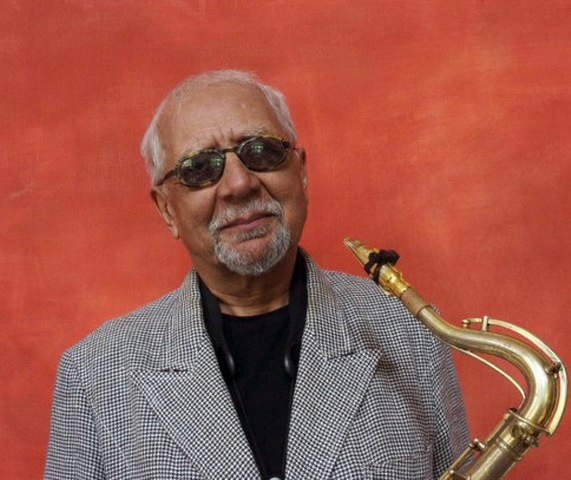
Peter Wockner's with saxophonist and composer Charles Lloyd 24th May 2014
Peter Wockner's with saxophonist and composer Charles Lloyd 24th May 2014 Peter Wockner: You've always had a spiritual connection with music. The…
This date is the archive capture date; the original publication date was unavailable.
Historical article recovered from a Wayback capture dated 2018-02-24.
Peter Wockner:
You’ve always had a spiritual connection with music. The notion of the mysticism of sound and the idea of searching for ones inner voice. The Greek Project sees you collaborate with vocalist Maria Farantouri. How close are you now to finding your holy grail of sound?
Charles Lloyd:
I am still searching, mining deeper. The closer I think I am getting, the deeper I have to go. The longer you live, the more experience you have in life, and you find the more you have to give.
PW:
You grew up in Memphis with great musicians like Booker Little, Harold Mabern, George Coleman and Phineas Newborn. What are your abiding memories of those days?
CL:
Like the soil of the Mississippi Delta, Memphis was a very fertile place to grow up in. I was surrounded by the great geniuses and progenitors of the Blues. Howlin Wolf, Johnny Ace, BB King, Bobby Blue Bland. And then there were the jazz greats like Duke Ellington, Cab Calloway, Count Basie, Lionel Hampton who came to town to perform at the major Black venue in Memphis, the WC Handy Theater. Phineas Newborn was my mentor, and steered me to study with the great Irvin Reasson, Booker Little was my best friend in high school and George Coleman was a few years older than and was like a mentor as well. Despite all of the racism that existed at that time in Memphis, it was also an amazing period to grow up there within the context of the developing jazz music.
PW:
In 2016, you and many others will be celebrating 50 years since the recording of the million selling album Forest Flower in 1966 at the Monterey Jazz Festival. Are there any plans to mark that event in a special way such as reforming the quartet with Keith Jarrett?
CL:
I will be performing at Monterey this year for 3 nights with 3 different configurations; Sangam with Zakir Hussain and Eric Harland, a duo with Gerald Clayton and my New Quartet with Jason Moran, Reuben Rogers and Eric Harland. I am taking it one day, one year at a time.
PW:
In 2006 you talked about your 1965 album Of Course, Of Course, saying that you and other members Tony Williams and Ron Carter were modernists and that you ‘had a need’. What do you feel your ‘need’ is at this stage of your career?
CL:
My ‘needs’ are few at this stage in life. Inner peace and to find the perfection of that one “note” that could say it all. Then I could put my horn down and go back into the woods.
PW:
You’ve always been flexible enough to deviate from the structural pillars of jazz having worked with the likes of The Doors, The Beach Boys and Jimi Hendrix. Indeed you’ve told the story of how Carlos Santana stood at the front of the stage at Fillmore yelling to you “Free the People Charles, Free the People”. When you look back on such a stellar career, how have you measured the level of your success?
CL:
I don’t have the skills to measure what you call a “Stellar career”. I am still searching and trying to sing my song with freshness and relevance.
PW:
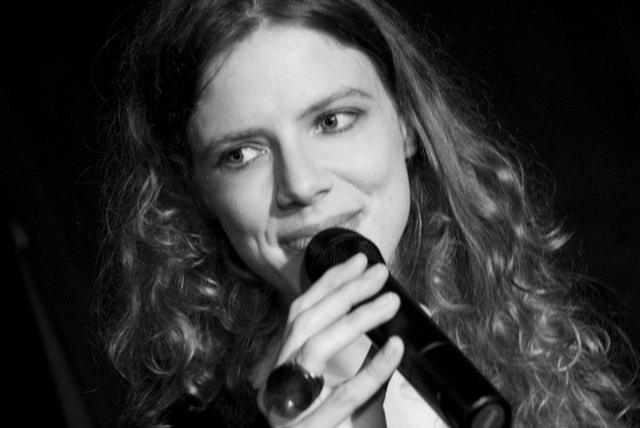
How were the seeds of the Greek Project sewn? What is it about traditional Greek music that you find compelling?
CL:
The first seeds were planted in my home town of Santa Barbara in November 2001 when a Greek friend of mine sponsored a concert with Maria at the University of California Santa Barbara. When I heard her sing with such depth and beauty, I knew she was the real deal. We met after the concert and the next summer when I had a concert in Athens I invited her to join me on stage. A beautiful friendship developed and over the next decade we shared music and ideas with each other, always with the idea of one day sharing this in a major concert setting. This came to be in 2010 with our concert at the incredible Herodion at the foot of the Acropolis. It was an amazing experience to stand on those stones that have been polished smooth over the centuries by the great actors and musicians who also stood on them to perform for the city of Athens.